Analysis of long-term time series spanning more than 60 years reveals pronounced multi-decadal warming signals and changes in oceanic structure in the East Sea, particularly in the Ulleung Basin.
01
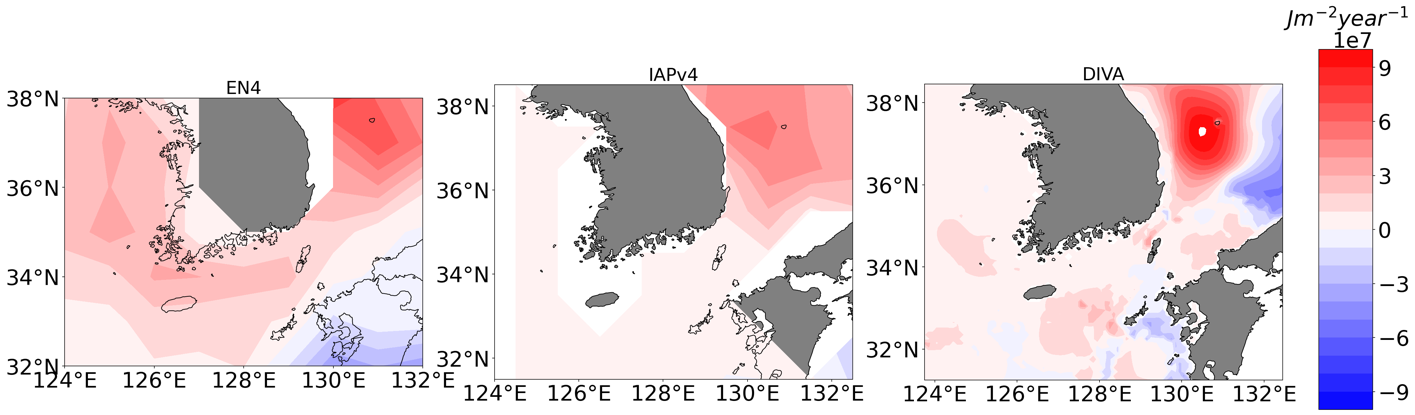
Increase in Ocean Heat Content (OHC)
From 1994 to 2023, the ocean heat content in the upper 500 m increased continuously, with the largest increase observed in the Ulleung Basin.
This indicates that the region plays a central role in warming among the waters surrounding the Korean Peninsula.
This indicates that the region plays a central role in warming among the waters surrounding the Korean Peninsula.
02
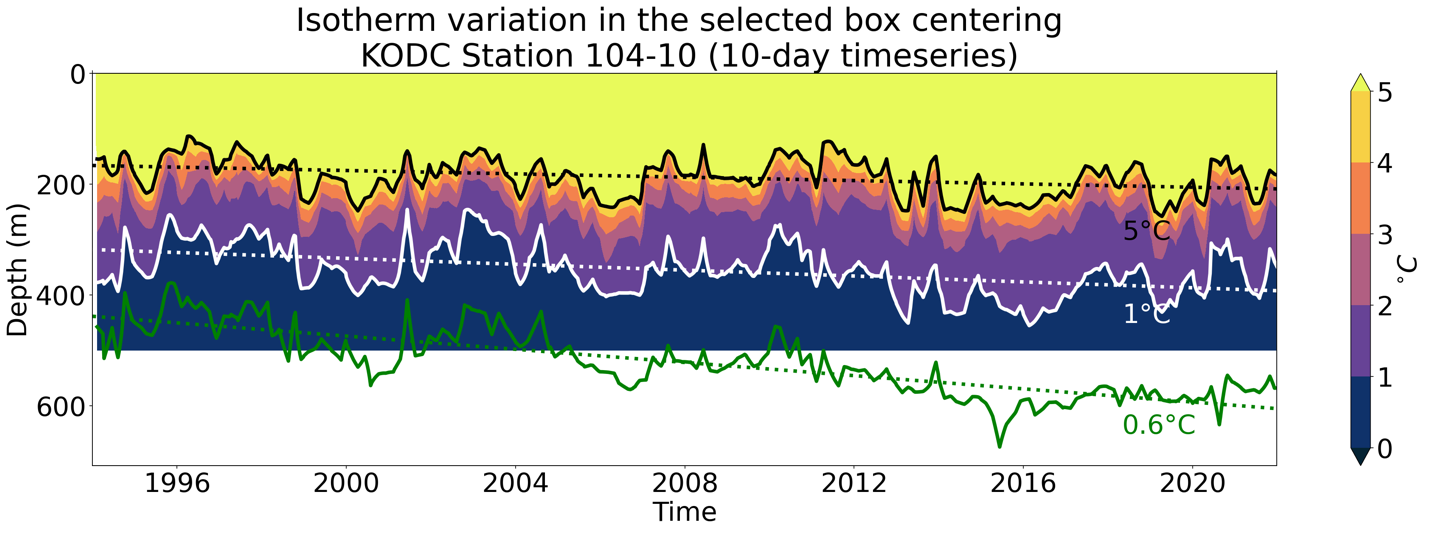
Persistent Deepening of Intermediate Isotherms
Analysis at the KODC/NIFS 104-10 station shows that the 5°C, 1°C, and 0.6°C isotherms have gradually deepened over several decades, indicating a steady warming of the intermediate waters in the East Sea.